
ENTERRA THERAPY
ENTERRA THERAPY
The First and Only Device Designed to Relieve the Nausea and Vomiting Symptoms of Gastroparesis*
What is Gastroparesis?
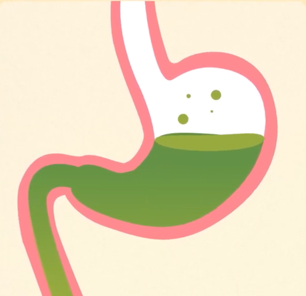
Gastroparesis is a medical condition that causes food to digest more slowly than normal. In a healthy digestive system, strong muscular contractions move food through the stomach through the digestive tract.
But with gastroparesis, the stomach muscles work poorly or not at all – preventing the stomach from emptying properly.
Gastroparesis has several causes, including type 1 diabetes and type 2 diabetes, postsurgical complications and other causes, but in many cases, the cause is unknown.
Over time, the chronic nausea, vomiting and discomfort caused by gastroparesis can lead to low blood sugar, malnutrition, and more.
How does Gastroparesis affect people?
The exhaustion, isolation, and frustration of gastroparesis patients is real and costly: gastroparesis patients experience higher rates of unemployment, underemployment, and reduced daily activities.1, 2, 3 The chronic nausea and vomiting symptoms of gastroparesis also negatively correlate with patients’ physical and mental health quality of life scores.
In a recent survey of 1,423 gastroparesis patients, only 4% said they were satisfied with available treatment options.4 If you’re living with gastroparesis, you know that the constant pain and discomfort is about more than malnutrition or missing meals – it’s about feeling like you’re missing out on your life.
Treating Gastroparesis
Diet modification, medications, and enteral nutrition are common ways to treat gastroparesis. Diet changes may include increasing liquid intake, restricting fats and plant fiber, and eating smaller, more frequent meals to maintain adequate nutrition and minimize symptoms. Prescribed medications often consist of prokinetic drugs to improve the rate of stomach emptying, and antiemetic drugs to control nausea and vomiting. Lastly, for temporary or more severe symptoms, liquid nutrition is delivered directly to the stomach through a feeding tube in the form of enteral nutrition.
However, despite these first-line therapies, the chronic nausea and vomiting symptoms of gastroparesis often still persist. If you have gastroparesis from diabetic or idiopathic (unknown) origins and you’ve already tried diet changes and medications without success, gastric electrical stimulation with Enterra Therapy may be an option for you.
A New Approach to Treating Gastroparesis
The Enterra System is the first and only device designed specifically to relieve the nausea and vomiting symptoms associated with gastroparesis from diabetes or unknown origins by gently stimulating your stomach – a unique kind of therapy called gastric electrical stimulation (GES).
Unlike other surgical treatment options, Enterra Therapy is implantable, customizable, and reversible.


More than 15,000 people have already received Enterra Therapy to help them take their seat back at the table.
How Enterra Therapy Works
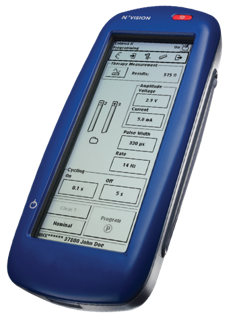
The Enterra System is made up of three parts:

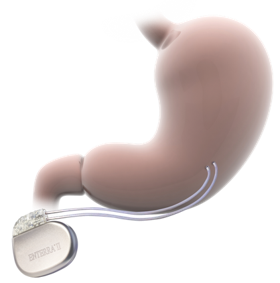
Once it’s implanted, the neurostimulator sends mild electrical pulses through the leads to gently stimulate the smooth muscles of the lower stomach. These pulses are designed to relieve the chronic nausea and vomiting associated with gastroparesis.
Using the programming device, your doctor will adjust the neurostimulator to help ensure you receive the level of stimulation that’s right for you. Adjusting your Enterra system’s level of stimulation is non-invasive and does not require surgery.
How is Enterra Therapy implanted?
Implanting the Enterra System typically takes 1-2 hours under general anesthesia. Your doctor will choose one of two minimally invasive surgical techniques to implant the system, based on personal preference and medical needs:
- Laparotomy or “open approach”, in which surgery is performed through a small abdominal incision, or
- Laparoscopy, in which special surgical instruments are inserted through small incisions
Most people are able to go home within 1-2 days of the procedure, while some are even able to go home on the same day.
After the Procedure
After you receive your Enterra System, your doctor will use the external clinician programmer to customize the level of stimulation that’s right for you. Programming is non-invasive and can be done in your doctor’s office or the hospital. If you have another implanted device, your doctor will follow special programming considerations.
After the Procedure
After you receive your Enterra System, your doctor will use the external clinician programmer to customize the level of stimulation that’s right for you. Programming is non-invasive and can be done in your doctor’s office or the hospital. If you have another implanted device, your doctor will follow special programming considerations.

Hear from an Enterra Therapy Patient
Mary’s Story
Enterra Therapy has given us hope – hope and the ability to fulfill the dreams that we wanted before I was diagnosed with gastroparesis.
Mary is a mother of two and a grandmother of one who loves spending time outdoors with her family. However, unending nausea and vomiting from gastroparesis took over her life. Hear how Enterra Therapy helped give Mary and her family hope again.
What to Expect After the Test
Once manometry testing is done, resume normal routines and medication as directed.
Expect mild throat discomfort; ease it with saltwater gargles or lozenges.
Contact healthcare provider if any unusual side effects occur for guidance.
Resume normal daily routines.
Continue taking prescribed medications.
Some throat discomfort or soreness may occur.
Gargle salt water or use lozenges to alleviate discomfort.
Enterra Therapy FAQs
How large is the Enterra neurostimulator?
The Enterra II Neurostimulator model 37800 is 2.4 inches (60 mm) long, 2.2 inches (55 mm) high, and 0.5 inches (11.4 mm) thick. It weighs 1.6 ounces (45 grams)
Will the Enterra neurostimulator eliminate my nausea and vomiting symptoms?
Enterra Therapy has 5 randomized control trails completed over 20 years of clinical research. You should speak with your doctor regarding the clinical data for Enterra Therapy.
Among the patients that do experience relief, results vary. Often a combination of treatment options is necessary to maintain relief.
Can you feel the stimulation?
Most people report they do not feel the stimulation. Call your doctor if you notice any long-lasting pulsating, uncomfortable stimulation, or both, in your abdominal area.
Important Safety Information
Enterra Therapy for chronic, resistant to medication nausea and vomiting associated with gastroparesis caused by diabetes or an unknown origin in patients aged 18 to 70 years: patients should always discuss potential risks and benefits of the device with their physician.
See full important safety information: https://www.enterramedical.com/important-safety-information/
*Humanitarian Device
Authorized by federal law for use in the treatment of chronic intractable (drug refractory) nausea and vomiting secondary to gastroparesis of diabetic or idiopathic etiology in patients aged 18 to 70 years. The effectiveness of this device for this use has not been demonstrated.
- Lacy BE, Crowell MD, Mathis C, Bauer D, Heinberg LJ. Gastroparesis: Quality of Life and Health Care Utilization. J Clin Gastroenterol. 2018;52(1):20‐24.doi:10.1097/MCG.0000000000000728.
- Bielefeldt K, Raza N, Zickmund SL. Different faces of gastroparesis. World J Gastroenterol. 2009;15(48):6052‐6060. doi:10.3748/wjg.15.6052.
- Wang YR, Fisher RS, Parkman HP. Gastroparesis-related hospitalizations in the United States: trends, characteristics, and outcomes, 1995-2004. Am J Gastroenterol. 2008;103(2):313‐322. doi:10.1111/j.1572-0241.2007.01658.x.
- 4. Yu D, Ramsey FV, Norton WF, et al. The Burdens, Concerns, and Quality of Life of Patients with Gastroparesis. Dig Dis Sci. 2017;62(4):879‐893. doi:10.1007/s10620-017-4456-7.
We got it.
Thank you for contacting us.
We’ll get back to you as soon as possible.